The Fuel-Powered Generator is a power generator building that generates power by burning liquid fuel ( Fuel,
Fuel,  Liquid Biofuel,
  Turbofuel,
  Rocket Fuel, or
  Ionized Fuel).
At 100% clock speed, one Fuel-Powered Generator produces 250 MW. The type of fuel does not affect power production, only burning time.
Fuel Consumption
Overclocking
The Fuel-Powered Generator can be overclocked using Power Shards. Overclocking increases the fuel consumption rate and produced power linearly. The same amount of power is always produced from the same input resources.
Setting up Fuel power
See the main article linked above for a full tutorial in multiple stages, from Fuel to Turbofuel.
Note: Always keep in mind the Pipeline throughput limit, 300 m3/min for Mk.1 and 600 m3/min for Mk.2
- Acquire 300 m3/min of Crude Oil (which is two impure Oil Extractors at 250%, one normal at 250% or one pure at 125%).
- Split the output of the Extractor and feed it to 5 Refineries.
- Merge the fluid output of all the Refineries into a single Pipe, then split it to feed 10 Fuel Generators; which can be done with ten at 100% clock speed. See Clock Speed For Power Generators for more details.
- A manifold arrangement (aka. in-line splitting and merging) is advised for the above setup.
- To deal with the Polymer Resin (this setup will produce 150/min), either sink it or refine it into Residual Rubber/Plastic. Ensure these byproducts never back up, or Fuel production will stop, which will eventually result in the generators running out of it and stopping.
This setup provides 2,500 MW of sustained power.
See also
Gallery
Using Fuel-Powered Generators is a good way of removing Heavy Oil Residue (by converting it into Fuel first), while also provide a boost to the Power production.
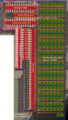
A Fuel-Powered Generator Plan that uses 300 m3 Crude Oil which is converted into Turbofuel to generate 22,350 MW of Power
History
- Patch 1.0:
- Renamed from Fuel Generator to Fuel-Powered Generator
- Changed power output from 150 MW to 250 MW
- Changed 5 Computer cost to 30 Copper Sheet
- Changed 10 Heavy Modular Frame cost to 15 Encased Industrial Beam
- Patch 0.5.0.10: Fixed Fuel-Powered Generator Status Indicator being offset
- Patch 0.4.0.0
- Decreased Fuel burn rate in Fuel-Powered Generator from 15 per minute to 12 per minute
- Patch 0.3:
- Replaced Conveyor input with a Pipeline input, now only accepts fluids
- Changed construction cost to five Computers, 10 Heavy Modular Frames, 15 Motors, 50 Rubber, and 50 Quickwire
- Patch 0.1.5: Changed construction cost from three Heavy Modular Frames, five Motors and five Circuit Boards to 10 Heavy Modular Frames, 10 Motors and five Computers
|
|---|
|
| Special | |
|---|
|
| Production | | Extractors | |
|---|
|
| Smelters | |
|---|
|
| Manufacturers | |
|---|
|
|---|
|
| Power | |
|---|
|
| Logistics | | Conveyors | |
|---|
|
| Pipelines | |
|---|
|
| Sorting | |
|---|
|
|---|
|
| Transportation | |
|---|
|
| Organization | |
|---|
|
| Foundations | |
|---|
|
| Walls | |
|---|
|
| Architecture | |
|---|


 Fuel
Fuel Turbofuel
 Liquid Biofuel
 Rocket Fuel
 Ionized Fuel
 Biomass Burner
 Coal Generator
 Geothermal Generator
 Nuclear Power Plant